
Did Jesus Rise From the Dead? The 6 Facts Even Skeptics Grant
Years ago I was having a conversation with a co-worker when she asked me, "How do you Christians believe in something as crazy as a man rising from the dead, just because someone else said it happened?" It's a fair question, but it's asked from ignorance. Which is why I replied, "Do you really think the only evidence for the resurrection is that one person wrote about it 2,000 years ago?" "Well, isn't that all the evidence?" she replied. What followed was a version of the conversation that I outline below.
Before we dive in, I just want to take a moment to do something I should have done back then: I'd like to commend her for the question. Unlike so many people, she identified the right question. People are constantly asking me things like "Does Jesus say it's wrong to be gay?" without any consideration for who he was. Listen, if Jesus was just a man, then it doesn't matter what he said. If he was who he claimed to be, on the other hand, then that question matters. So she got it right.
Did Jesus rise from the dead?
It is the question everything hangs on. The apostle Paul said it himself. If Christ was not raised, our faith is worthless, and we should be pitied more than anyone (1 Corinthians 15:17-19). Christianity does not survive a dead Jesus. So let us not dodge it.
Did Jesus rise from the dead? I am going to make the case that he did. And I am going to do it without asking you to take my word for it, or the Bible's word for it, at the start. We are going to begin with facts that skeptical historians already grant, and then see which explanation survives.
First, What Are We Actually Asking?
Before we argue about anything, let us define our terms. That is always step one.
When I say "Jesus rose from the dead," I mean something specific: that Jesus of Nazareth was executed by the Roman Empire, was buried, and then, three days later, was bodily alive again, appearing to real people in real places over a period of weeks.
I am not talking about a metaphor. Not "his teachings lived on." Not "he lives in our hearts." I mean the tomb was empty and people saw him, touched him, and ate with him.
Now we can argue about whether it happened.
Why I Do Not Start With "Because the Bible Says So"
Here is my method, and it is deliberate.
If I start with "the Bible says Jesus rose," a skeptic can shrug and say, "I do not trust the Bible." Conversation over. Nothing gained.
So instead, I start where the skeptic already is. Gary Habermas spent decades surveying resurrection scholarship, more than 1,400 scholars, believers and skeptics alike. He found twelve facts about the death of Jesus that the overwhelming majority of historians grant as historically solid, regardless of what they personally believe.
Twelve. I only need six.
This is called a minimal-facts argument: use as few agreed-upon facts as necessary, and see which explanations can survive them. Think of it like a detective at a crime scene. Detectives do not start with a suspect and work forward. They start with the evidence and reason backward to the most likely cause.
Here are the six facts. Nearly every historian in the field, Christian, atheist, or otherwise, grants all six:
Jesus died by Roman crucifixion. Not debated. A public Roman execution, confirmed by sources inside and outside the early church.
His disciples had experiences they believed were appearances of the risen Jesus. Whatever caused them, the disciples were convinced they had seen him alive. The early sources record twelve distinct instances, and at least nine of them were appearances to two or more people.
They were tortured and killed for saying so, and none recanted. Every one of them could have saved his life by admitting it was a story. None did.
James converted. Jesus' own brother was a skeptic during his ministry. After the crucifixion he led the Jerusalem church, and was martyred for it. Something changed his mind.
Paul converted. Saul of Tarsus hunted Christians, arresting them, voting for execution. Then he experienced what he believed was the risen Jesus and flipped completely: from fiercest enemy to most tireless missionary, eventually dying for it.
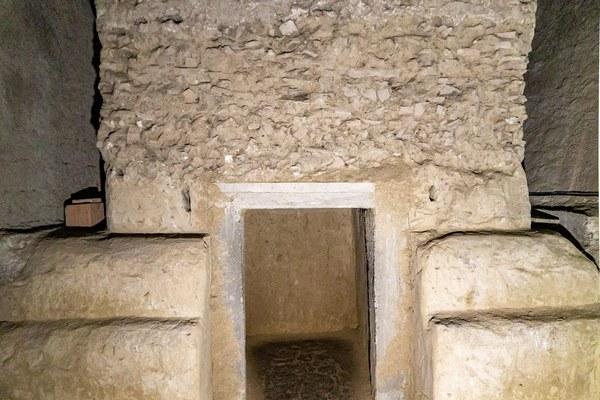
The tomb was empty. Even Christianity's earliest opponents agreed. Their counter-story was that the disciples stole the body, which explains an empty tomb rather than denying one.
Six facts. Now the question: which theory explains all six?
The Scorecard: How to Test Any Theory
Here is the rule, applied fairly to every theory including my own:
A theory has to explain all six facts. Not most. All.
Five out of six is a fail. That is the deal. And I am going to be generous with the checks. When a theory can plausibly account for a fact, it gets the box.
Four Theories, One Scorecard
1. The Wrong Tomb Theory
The idea: the disciples went to the wrong tomb, found it empty, and concluded Jesus had risen.
This one checks the first box easily. Jesus died by crucifixion, was buried, and the disciples visited a tomb. Fine.
But it is silent on everything else. It says nothing about the appearances, nothing about the martyrs, nothing about James or Paul. And it collapses on the sixth fact in a way people miss: the moment the disciples started preaching, their enemies would have marched everyone to the right tomb and ended it in an afternoon. They did not. They could not.
2. The Stolen Body Theory
This is the oldest objection in the book, literally. Before the resurrection was even widely preached, the chief priests were already telling people the disciples stole the body (Matthew 27:62-64). So let us steelman it: the disciples faked the whole thing, stole the corpse, and launched a lie.
It checks three boxes without straining. The crucifixion happened. The "appearances" were fabricated, which is what the theory claims. And the tomb was empty, because they emptied it. In fact, the stolen-body story, invented by Christianity's enemies, accidentally confirms the sixth fact. You do not invent an explanation for an empty tomb unless the tomb is empty.
Here is where it dies, and it is the single strongest argument against it: people die for what they believe is true. They do not die for what they know is a lie.
Every disciple faced torture and execution for claiming Jesus rose. If they had stolen the body, they would have known, with certainty, that it was made up. Yet not one cracked. Not one said, "Fine, we made it up." Conspiracies unravel when the cost gets real. This one never did.
It is also silent on James and Paul. A stolen body does not convert a skeptical brother or a violent persecutor.
3. The Hallucination Theory
The idea: the disciples were grieving, desperate, and imagined it. Grief hallucinations are a real thing. People do sometimes "see" lost loved ones.
Fair enough, as far as it goes. Here is where it breaks, and I will let an expert say it. Clinical psychologist Gary Collins explains the science: "Hallucinations are individual occurrences. By their very nature only one person can see a given hallucination at a time. They certainly aren't something which can be seen by a group of people. Neither is it possible that one person could somehow induce a hallucination in somebody else." (source)
Hallucinations are private the way dreams are private. You cannot catch someone else's. But at least nine of the twelve recorded appearances were to groups, including one to more than five hundred at once. Grief might explain one person seeing something. It cannot explain a crowd seeing the same thing.
I will grant this theory more than most apologists do. If we set the group problem aside, the martyrdoms make sense (people die for sincerely held beliefs), James's conversion is logically possible, and Paul's experience is actually the easiest to fit, since his companions heard a sound but saw no one (Acts 9:7). Four boxes checked. It is the best of the naturalistic theories.
But it cannot survive the two facts that matter most. It fails the appearances, because groups do not share hallucinations. And it fails the empty tomb: if everyone merely imagined it, the authorities could have produced the body and ended the discussion in a day.
4. The Swoon Theory
The idea: Jesus did not actually die on the cross. He fainted, was mistaken for dead, and later revived in the cool of the tomb.
Let us ask the simple question first: is that possible? Could a man survive a Roman crucifixion?
Three physicians, led by Mayo Clinic pathologist William Edwards, published their findings in the Journal of the American Medical Association after studying the historical and medical evidence. Their conclusion: Jesus endured a flogging that produced deep lacerations and massive blood loss, followed by crucifixion, followed by a spear thrust to the side. "Modern medical interpretation of the historical evidence indicates that Jesus was dead when taken down from the cross." (JAMA, March 21, 1986)
Roman soldiers were professional executioners. The idea that they botched one, and that a man survived flogging, asphyxiation, and a spear wound, is medically indefensible. So the first box stays unchecked.
I will grant the theory two boxes for argument's sake. If Jesus had somehow survived, that would explain the appearances (his followers saw a living man) and the empty tomb (he walked out). But it cannot explain the martyrs. Picture what the disciples would have seen: a man beaten, bleeding, barely able to stand, in desperate need of medical care. Does that inspire eleven men to preach fearlessly and die for him? Does it convert his skeptical brother? A victim in need of urgent care does not launch a movement. A conqueror of death does.
The Grid: Every Theory Against Every Fact
Here is the full scorecard, the way I lay it out in my book. Check marks are given generously. A theory only needs all six to survive.
Theory | 1. Crucifixion | 2. Appearances | 3. Martyrs | 4. James | 5. Paul | 6. Empty tomb |
|---|---|---|---|---|---|---|
Wrong tomb | ✔ | ✘ | ✘ | ✘ | ✘ | ✘ |
Stolen body | ✔ | ✔ | ✘ | ✘ | ✘ | ✔ |
Hallucination | ✔ | ✘ | ✔ | ✔ | ✔ | ✘ |
Swoon | ✘ | ✔ | ✘ | ✘ | ✘ | ✔* |
Resurrection | ✔ | ✔ | ✔ | ✔ | ✔ | ✔ |
*Granted for argument's sake; the medical evidence rules it out.
One theory checks every box. Every alternative fails somewhere, usually on the martyrs, the group appearances, or the empty tomb. The philosopher's rule is Occam's razor: the simplest explanation that accounts for all the evidence is most likely true. Here, we do not even need the razor. There is only one theory left standing.
Why This Matters
Now let me talk to two people directly.
First: the Christian who is afraid to say any of this out loud. You do not need a theology degree. You do not need all the answers. You need the evidence, and it is on your side. Six facts, granted by skeptics, one explanation standing. That is enough to stand on. Courage is not the absence of fear. It is speaking anyway.
Second: the person whose objection is not intellectual. Maybe something in you still says, "I just cannot believe in miracles." Be honest about that. Sometimes the barrier is not the head, it is the heart. The God we are talking about is not asking for intellectual perfection. He is asking for honest consideration. Start there.
Christianity does not ask you to check your brain at the door. It asks you to bring it.
Frequently Asked Questions
Do most scholars reject the resurrection? Scholars disagree about the explanation, but the overwhelming majority, skeptics included, grant the facts: the crucifixion, the appearances, the martyrdoms, the conversions of James and Paul, the empty tomb. The debate is not over whether these happened. It is over what explains them.
Is this not just "the Bible says so" dressed up? That is the point of the minimal-facts approach. We started with facts historians grant without assuming the Bible is reliable. The argument works even if you treat the New Testament as ancient historical documents. Whether those documents are trustworthy is a separate, and important, question.
Could the disciples have been lying? Then explain why every one of them chose torture and death over admitting it. Liars recant when the cost gets high. Conspiracies collapse under pressure. This one never did.
You cannot prove a miracle happened, though, right? History does not deal in mathematical proof. It deals in inference to the best explanation, the same reasoning detectives and juries use. Nobody "proves" a crime scene. They find which explanation best fits the evidence. Apply that standard here, and the resurrection wins.
Want to see what this kind of conversation looks like in person? Watch one of our campus "Let's Talk About It" conversations: real students, real questions, honest answers.
